Garage Door Roller Replacement
Grinding on the way up, a rattle at every hinge, a shake through the curve? That is the rollers, not the opener. We swap all ten or twelve for sealed nylon, check the hinges, and rebalance the door in about an hour.
Ten Rollers Carry the Door Through the Curve.
A four-section residential door rides on ten rollers, two per section plus two at the top bracket. A five-section 8-foot door rides on twelve. Each one is a small wheel on a steel stem, and the stem sits in a hinge or bracket while the wheel runs inside the track. Every time the door opens, each wheel turns about fifteen times and carries its share of a door that weighs 130 to 350 pounds through a 90-degree bend. The rollers are the only part of the door that moves against another part on every cycle. They wear out first.
Most homes in Glynn, Camden, and Chatham County were built with builder-grade rollers. Black plastic wheels with no bearing, or steel wheels with a seven-ball open bearing. Both are rated for around 10,000 cycles. At four cycles a day that is seven years, and on the coast the open steel bearings usually seize from salt before then. A seized roller slides instead of rolls, grinds a groove into the track, and loads the opener with friction it was never sized for. The swap to sealed nylon is the single cheapest upgrade a garage door can get. Our checklist on every roller job:
- All ten or twelve rollers replaced, never one or two
- Sealed nylon wheel, 10- or 13-ball bearing, rust-resistant stem
- Correct wheel size and stem length confirmed on site
- Every hinge inspected, worn or cracked hinges replaced
- Track checked for grooves, flares, and loose lag bolts
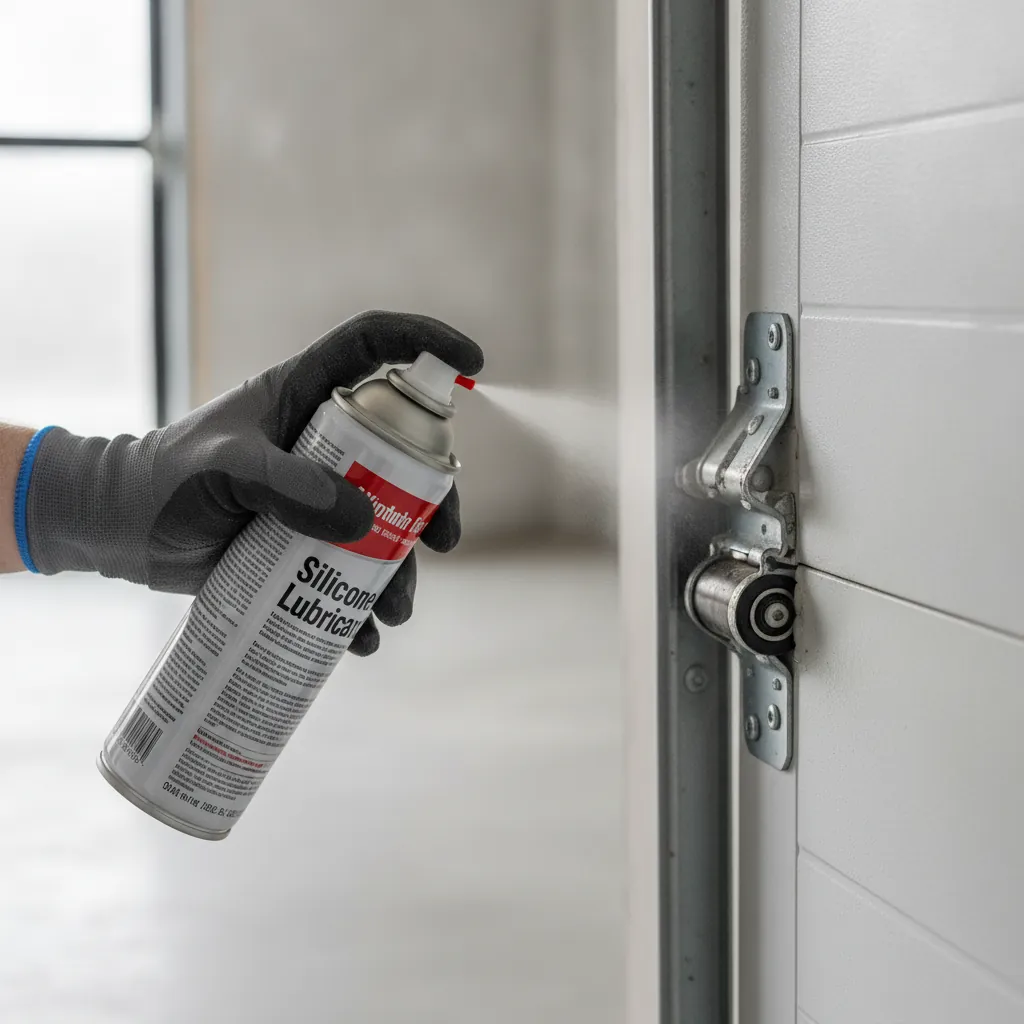
- Hinges, bearings, and springs lubricated with marine-grade spray
- Balance test and opener force reset
- One-year workmanship warranty
Six Signs It Is the Rollers.
Rollers rarely fail all at once. They announce it for months. Any two of these together and the set is due.
Grinding or Rumbling
A dry or seized bearing stops turning. The wheel drags through the track and the sound travels through the whole door and into the house above the garage. Lubricant quiets it for a week. Then it comes back.
Shake Through the Curve
The door runs smooth on the vertical track, then shudders as each section rounds the bend. Flat-spotted or cracked wheels bump at the radius instead of rolling through it.
Roller Out of the Track
A wheel that cracks or a stem that bends lets a corner of the door pop free. If the door is already hanging crooked, stop using it and see our off track garage door repair page first.
Wobble on the Stem
Grab a roller with the door closed and the opener unplugged. If the wheel rocks on its stem or the stem moves in the hinge, the bearing is gone and the stem is wearing the hinge oval.
Rust Bloom on the Stems
On the coast, orange rust at the base of the stem where it enters the hinge means salt has reached the bearing. The rest of the set is on the same clock even if only one roller is loud yet.
Opener Straining
The motor sounds like it is working harder, the door opens slower, or the opener reverses partway for no reason. Friction from seized rollers trips the force limit. A new opener on bad rollers will do the same thing.
Leave the Bottom Rollers Alone.
Do not pull the bottom roller or the bottom bracket. The bottom bracket on each side anchors the lift cable, and that cable is under the full pull of the torsion spring even with the door closed. Removing the bolts releases it all at once. The middle rollers can be swapped by a careful owner one hinge at a time. The bottom two cannot, and they are the ones that fail first because they sit in blown rain and sand. Our garage door cable repair page explains that bracket in more detail.
Unplug the opener if the door is loud or shaking. Running a door on a seized roller grooves the track and can pop the roller out at the curve, which turns a one-hour roller swap into a re-track and sometimes a bent section.
Do not grease the track. Rollers ride in the track dry. Grease holds sand and salt against the wheel and shortens the life of the new set. Lubricant goes on the bearing and the hinge pin only, and we show you where on the visit.
Count your sections. Four sections means ten rollers, five means twelve. Tell us the count and whether the door is wood, steel, or insulated steel and we can quote the set on the phone.
Priced as a Set, Not a Wheel.
- Full set of sealed nylon rollers, installed: typically $150 to $300
- Rollers plus worn hinges replaced together: typically $250 to $450
- One roller out, door re-tracked: typically $150 to $250
- Rollers added to a maintenance visit: quoted on site
The spread inside those ranges is the door. A ten-roller 9-foot steel door sits at the low end. A twelve-roller 18-foot insulated door with long-stem top rollers sits at the high end. Written quote before work starts, and the quote you approve is the invoice. The diagnostic is waived with any repair and $50 off any repair applies. If the hinges, cables, and springs are all original on a door past ten years, we will say so and price the rest beside the rollers on the same page, because the whole set ages together. Everything else on the door is covered on our garage door repair page.
From a grinding door to a quiet one. Five steps.
Call answered live
A real dispatcher answers (912) 209-4079, 24/7. Tell us what the door sounds like and how many sections it has. Roller swaps are scheduled same-day in most cases across Brunswick, Savannah, and the I-95 corridor.
Truck rolls your way
Two-inch and three-inch sealed nylon rollers in both stem lengths ride on every truck, along with hinges in every gauge, so the job does not wait on a parts run.
Diagnose first, quote in writing
The tech runs the door by hand with the opener unplugged, checks each roller, hinge, and track section, and tests the balance. You get a written price for the set, plus any hinge or track work, before anything is touched.
Rollers swapped, tension handled
Middle rollers come out one hinge at a time with the door secured. The bottom rollers are done with the spring tension and cable handled correctly, which is the part a homeowner cannot do safely.
Lubed, balanced, tested
Hinges, bearings, and springs get marine-grade lubricant. Spring balance is checked, opener force and travel limits reset, photo eyes tested. The door is run ten times and the invoice matches the estimate.
Before You Call.
How much does garage door roller replacement cost?
A full set of sealed nylon rollers installed on a standard residential door typically runs 150 to 300 dollars. If the hinges are worn or rusted and get replaced at the same visit, rollers and hinges together typically run 250 to 450. A single roller that popped out and needs the door re-tracked falls under off-track repair, typically 150 to 250. You get a written quote before any work starts, the diagnostic is waived with the repair, and 50 dollars off any repair applies.
How long do garage door rollers last?
Builder-grade rollers, the black plastic or open-bearing steel wheels installed with most new homes, are rated around 10,000 cycles, which is five to seven years of normal use. Sealed nylon rollers with a 10- or 13-ball bearing are rated around 100,000 cycles, which outlasts the door. On the coast, open steel bearings often seize from salt well before they wear out, so the upgrade pays for itself sooner here than inland.
Are nylon garage door rollers better than steel?
For a residential door, yes. Sealed nylon rollers run quieter, keep sand and salt out of the bearing, and do not wear a groove into the track the way a seized steel wheel does. Plain steel rollers belong on heavy commercial doors and three-inch track. We install nylon rollers with a 10- or 13-ball sealed bearing and a stem that resists rust.
Can I replace garage door rollers myself?
The middle rollers can be swapped by a careful owner, but the bottom rollers cannot be done safely without releasing spring tension. The bottom bracket that holds the bottom roller also anchors the lift cable, and it is under the full pull of the spring even with the door closed. That is the bracket that sends people to the emergency room. We replace all ten or twelve in the same visit with the spring tension handled correctly.
Why is my garage door so loud?
Worn rollers are the most common cause. A roller with a dry or seized bearing slides through the track instead of rolling, which makes a grinding or rumbling sound, and a cracked or flat-spotted wheel clacks at every hinge. The other usual causes are loose hinge bolts, a dry opener chain, and a door out of balance. A roller swap plus lubrication fixes most loud doors in about an hour.
What size rollers does my garage door use?
Almost every residential sectional door runs two-inch rollers, which have a wheel about 1-3/4 inches across that rides in two-inch track, on a four-inch stem. Top rollers often use a longer seven-inch stem so the top bracket can be adjusted. Three-inch rollers are for commercial doors and three-inch track. We carry both sizes and both stem lengths on the truck, so the size is confirmed on site and does not change the price.
Salt Seizes a Bearing Before It Wears Out.
Inland, a steel roller wears out. On the coast, it seizes. The open seven-ball bearing on a builder-grade steel roller has no seal, and the salt air that moves across St. Simons, Jekyll, Amelia Island, and the marsh side of Brunswick gets into it and corrodes the balls and race. Once the bearing locks, the wheel drags and cuts a groove in the track. We see doors from 2015 subdivisions in Kingsland and Yulee that already have grooved track from five years of a seized roller. Sealed nylon rollers close that path. The bearing is capped on both sides, the nylon wheel does not corrode, and the stem we use is coated or stainless so it does not rust where it enters the hinge. Our garage door rust and salt air guide covers the rest of the hardware on the same clock.
The second coastal factor is sand. Blown sand collects in the bottom foot of the track and in the radius, and a plastic or open-bearing roller grinds it into the wheel. That is why the bottom two rollers on a beach-side door fail first and why we check the bottom seal while we are there. Rinse the track with fresh water a few times a year, keep grease off it, and lubricate the hinge pins and bearings, which is part of every garage door maintenance visit. A sealed nylon set installed that way outlasts the opener and usually the door.
Same trucks. Twenty-six cities.
garage door roller replacement in Brunswick · garage door roller replacement in St. Simons Island · garage door roller replacement in Jekyll Island · garage door roller replacement in Sea Island · garage door roller replacement in Darien · garage door roller replacement in Savannah · garage door roller replacement in Pooler · garage door roller replacement in Richmond Hill · garage door roller replacement in Kingsland · garage door roller replacement in St. Marys · garage door roller replacement in Waycross · garage door roller replacement in Fernandina Beach · garage door roller replacement in Ponte Vedra Beach · garage door roller replacement in Jacksonville · see every service area
Loud Door? One Hour, One Price.
Sealed nylon rollers across Coastal Georgia and Northeast Florida. Written quote before work. $50 OFF any repair.
Call (912) 209-4079