Commercial Garage Door Preventative Maintenance
Every door inventoried. Every visit on the calendar. Every finding in writing. A maintenance program for dock doors, rolling steel, high-speed doors, and fire doors from Savannah to Jacksonville.
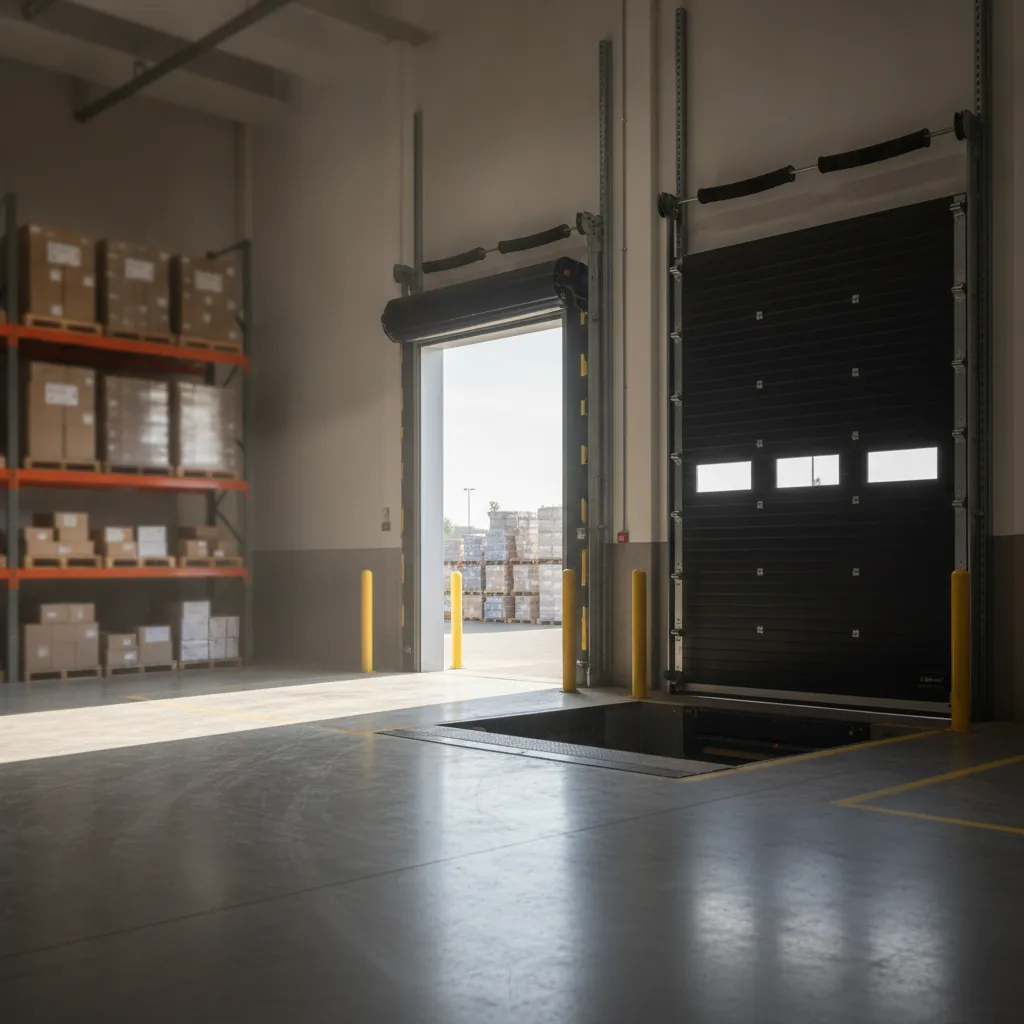
Planned Maintenance for Every Door on the Building.
A commercial door preventative maintenance program is a written schedule of inspection, adjustment, lubrication, and documentation for every door at your facility. We count the doors, rate each one by how hard it works, and set the visits. High-cycle dock doors are seen quarterly. Rolling steel and standard sectional doors are seen twice a year. Fire doors get their NFPA-80 inspection and drop test once a year. You get a signed report after every visit and a written quote for anything that needs a repair.
It is the planned side of our commercial garage door repair and maintenance work. Repair is what happens after a door fails. The program is how most of those calls get avoided.
- Door-by-door inventory on the first visit
- Visit frequency set by cycle count, not by guesswork
- Springs, cables, rollers, track, operators, and safety devices checked
- NFPA-80 fire door inspection and drop test scheduled in
- Signed written report for each door, each visit
- Repairs quoted in writing before any work starts
- Priority emergency response for program clients
- One agreement for one building or twenty
Maintenance Frequency Follows Cycle Count.
A commercial door wears by the cycle, not by the calendar. One open and one close is one cycle. A standard torsion spring is rated for about 10,000 of them. Put that spring on a dock door that cycles 50 times a shift and it is used up in about 200 working days. High-cycle springs rated for 25,000, 50,000, or 100,000 cycles stretch that out, but the arithmetic never stops. The schedule below is where most facilities on the coast land. We adjust it door by door after the first inventory.
| Door and duty | Typical use | Program frequency |
|---|---|---|
| High-cycle dock and sectional doors | 50 or more cycles a shift. Distribution, cold storage, manufacturing, fleet bays. | Quarterly |
| High-speed fabric and rubber doors | Hundreds of cycles a day. Freezer and cooler openings, forklift aisles. | Quarterly |
| Rolling steel service doors | A few cycles a day. Warehouse and shop openings, receiving doors. | Twice a year |
| Standard sectional doors | Normal duty. Auto bays, self-storage, municipal garages, fire stations. | Twice a year |
| Rolling fire doors and counter fire shutters | Rarely moved. Fire walls, serving lines, pass-throughs. | Annual NFPA-80 inspection and drop test, minimum |
| Security grilles and storm shutters | Daily open and close, or seasonal. | Twice a year, with one visit before June 1 |
Fire-rated doors are their own category. They barely move, so they do not wear out. They seize. The annual test is the only time most of them close on their own, and the procedure is laid out in our guide to the NFPA-80 fire door drop test.
The Commercial Door Maintenance Checklist.
The same checks on every door, every visit, so this quarter's report can be read against last quarter's. Sectional doors, rolling steel, and high-speed doors differ in the details. The categories do not.
| Component | What the tech checks | What it prevents |
|---|---|---|
| Springs and counterbalance | Balance test, visible fatigue, cycle count against the spring's rating, shaft and bearings. | A broken spring with a truck at the dock. |
| Cables, drums, and chains | Fraying, corrosion at the bottom bracket, drum set screws, chain tension on rolling steel. | A dropped or cocked door. |
| Rollers, hinges, and track | Worn bearings, cracked hinges, loose track bolts, plumb and spacing, impact damage. | An off-track door and bent sections. |
| Guides, slats, and bottom bar | Bent guide angles, missing endlocks, creased slats, bottom bar level. | A rolling door that binds or jams. |
| Operator | Brake, clutch, belt or chain, limit settings, gear reducer, mounting, manual release. | A burned-out motor and a door stuck open at close of business. |
| Safety devices | Photo eyes, sensing edge, reversing response, warning devices, interlocks. | An injury claim. |
| Seals and fasteners | Bottom astragal, jamb and header seals, anchor bolts, wall angle fasteners. | Water, pests, and lost conditioned air. |
| Lubrication and cycle test | Bearings, rollers, hinges, springs, and chains lubricated. Door cycled and timed. | Wear that turns into the next service call. |
Operators get as much attention as the doors. A brake that is slipping or a limit that has drifted shows up weeks before the motor quits. Parts and replacements for every make are covered on the commercial door operators page.
Five Steps From Walkthrough to Schedule.
Site assessment
We walk the facility with your maintenance or operations lead and inventory every door: location, make, size, spring type, operator, condition, and how many times a day it runs.
Written program
You get a door list, a visit frequency for each door, the fire doors flagged for NFPA-80 testing, and a price for the year. In writing. Nothing starts until you approve it.
Scheduled visits
Visits go on the calendar for the year, in the windows that suit the building. Before first shift. Between hotel checkouts. On the day the school is empty.
Signed report
Each door gets a line: what was checked, what was adjusted, what is wearing, and what needs a repair. Signed by the tech and left with you the same day.
Repairs on your approval
Anything beyond adjustment and lubrication is quoted in writing. Approve it and most repairs are finished from the truck. The quote you approve is the invoice.
Salt Air, Storm Season, and the Doors That Take Both.
A maintenance interval written for an inland warehouse is too long for a building near the water. Salt reaches every door within a few miles of the ocean, the sounds, and the marsh, and it goes after the parts under the most tension first: bottom brackets, lift cables, springs, and the chains and guides on rolling steel. Facilities at the Port of Brunswick, along the Savannah River, on the barrier islands, and on the Jacksonville beaches get corrosion checks on every visit and a stainless or galvanized replacement where a plain steel part has started to pit.
Hurricane season runs June 1 through November 30. Program clients get one visit timed ahead of it. Wind-rated doors are checked for the things that carry the load: reinforcement struts, track brackets, fasteners into the jamb, and the locks or pins that have to be engaged before a storm. Storm shutters and security grilles are cycled so they are known to close. If a door has lost its rating label or was never rated, we say so in the report and price a wind load rated commercial garage door beside the repair.
Fewer Emergency Calls
A spring near the end of its cycle rating is replaced on a scheduled visit, not at 5 AM with trailers waiting.
Paper for the Auditor
Signed reports for every door, plus the separate NFPA-80 fire door record the fire marshal and the insurance carrier ask for.
A Number You Can Budget
The year's maintenance is priced up front. Wearing parts are flagged a visit ahead, so repairs land in a budget and not in a crisis.
Facilities That Cannot Have a Door Down.
Warehouses, Ports & Plants
Dock doors and high-speed rubber doors that cycle all shift. Distribution on the I-95 corridor, port-side warehouses in Brunswick and Jacksonville, cold storage, mills, and processors across southeast Georgia. Quarterly visits, before first shift.
Hospitals, Schools & Public Buildings
Fire-rated openings, cafeteria shutters, loading docks, and ambulance and apparatus bays. The program folds the annual rolling steel and fire door service into the same schedule, with the signed record on file.
Hotels, Resorts & Restaurants
Service-entrance doors, parking gates and grilles, and commercial counter doors and shutters. Visits set around checkouts and service hours on the islands and the beaches. Quiet work. No guest disruption.
Self-Storage, Auto & Retail
Hundreds of roll-up doors at a storage property. Service bays at a dealership. Storefront grilles and commercial security and storm shutters. One agreement covers every door at every address.
Before You Sign Anything.
What is a commercial door preventative maintenance program?
It is a written agreement to inspect, adjust, lubricate, and document every door at a facility on a set schedule, instead of waiting for one to fail. We inventory the doors, set a visit frequency for each one based on how hard it works, and show up on those dates. Every visit ends with a signed report, and anything that needs a repair is quoted in writing.
How often should commercial garage doors be serviced?
It depends on cycles. High-cycle dock doors should be inspected quarterly. Rolling steel and sectional doors on normal duty typically need service twice a year. Fire-rated doors need an NFPA-80 inspection and drop test once a year at minimum. A door that opens 50 or more times a shift belongs on the quarterly list no matter what type it is.
What does a preventative maintenance visit include?
Spring and counterbalance check, cables and drums, rollers, hinges, tracks and guides, fasteners, weather seals, the operator and its brake, limit settings, and every safety device on the door: photo eyes, sensing edges, and the reversing system. Moving parts are lubricated, the door is balanced and cycled, and the findings go on a report for that door.
Is NFPA-80 fire door testing part of the program?
Yes, when the facility has fire-rated doors. The annual NFPA-80 inspection and drop test is scheduled into the program so the date does not slip, and it is done by our IDEA Fire Door Technician. The signed fire door record is kept separate from the general maintenance report, because that is the one the fire marshal and the insurance carrier ask for.
Do you maintain doors you did not install?
Yes. We service every major commercial door brand, including Cookson, Cornell, Overhead Door, Wayne Dalton, and Raynor, and the operators that run them. The first visit is a baseline: we record the make, size, spring type, and condition of each door so the next visit starts from facts.
Can one agreement cover several buildings?
Yes. Multi-site property managers and operators with locations across Coastal Georgia and Northeast Florida can put every building on one agreement, with one schedule and one point of contact. Each site still gets its own door inventory and its own reports. Volume pricing is available and is written into the agreement.
What does a maintenance program cost?
It is priced per door and per visit, based on the door type, the size, and how often it needs to be seen. We do not publish a flat number, because a 10-door self-storage site and a 60-door distribution center are different jobs. We walk the facility, count the doors, and put the price for the year in writing. Program clients get better rates than one-off service calls.
One Shop on Rose Drive. Two States of Doors.
commercial garage door maintenance in Brunswick · commercial garage door maintenance in Savannah · commercial door service in Pooler · commercial door service in Hinesville · commercial door service in Kingsland · commercial garage door maintenance in Waycross · commercial garage door maintenance in Jacksonville · commercial door service in Fernandina Beach · see every service area
Start With a Door Count.
We walk the facility, inventory every door, and put the program and the price in writing.
Call (912) 209-4079